SwaPrep presents · A chapter in Polity
Fundamental Rights
Part III of the Constitution — six promises the State cannot break, and the one article that lets you hold it to them.
7 acts · 16 scenes · scroll to play↓
I
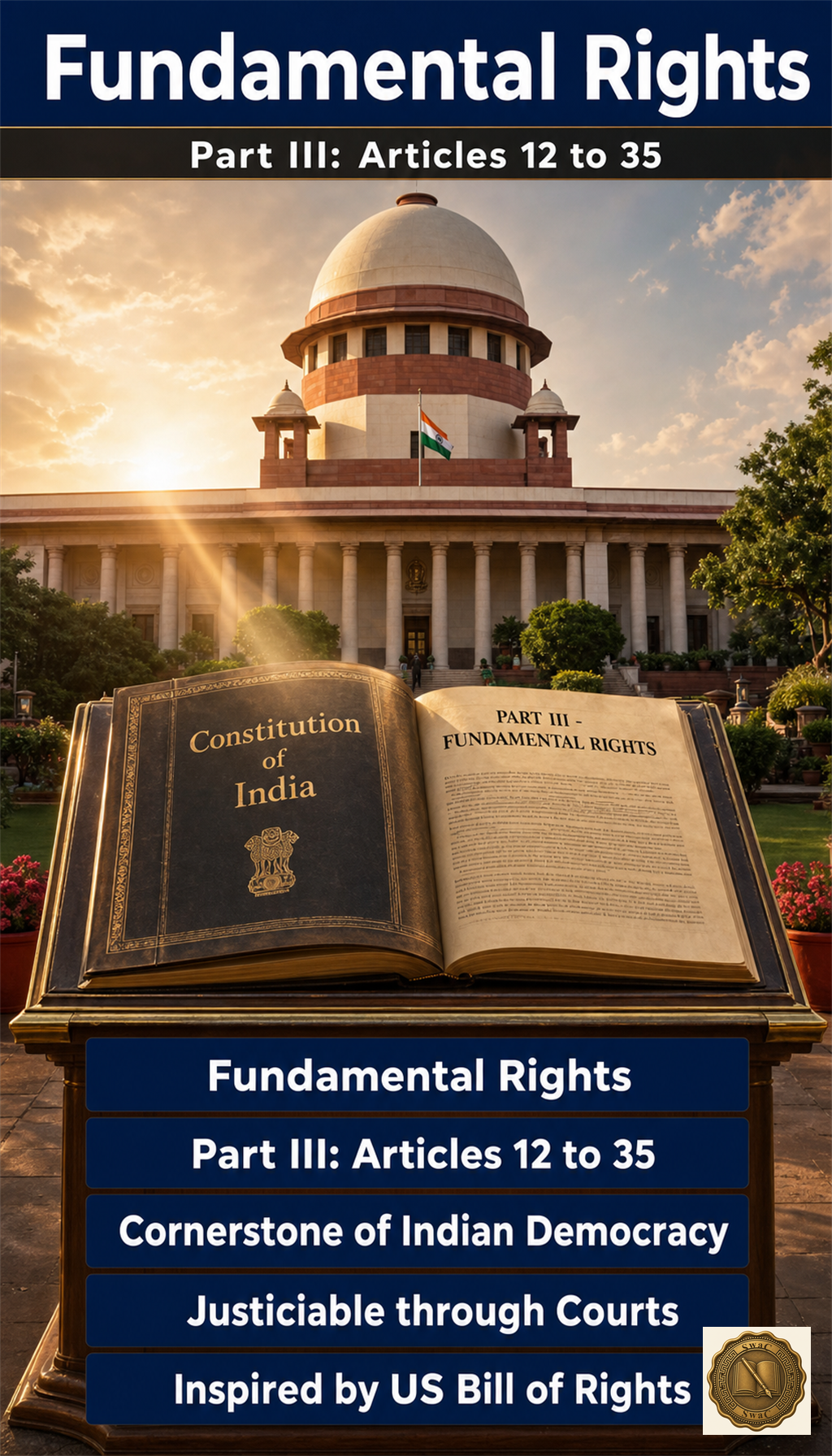
The Cornerstone

The demand1931 CE
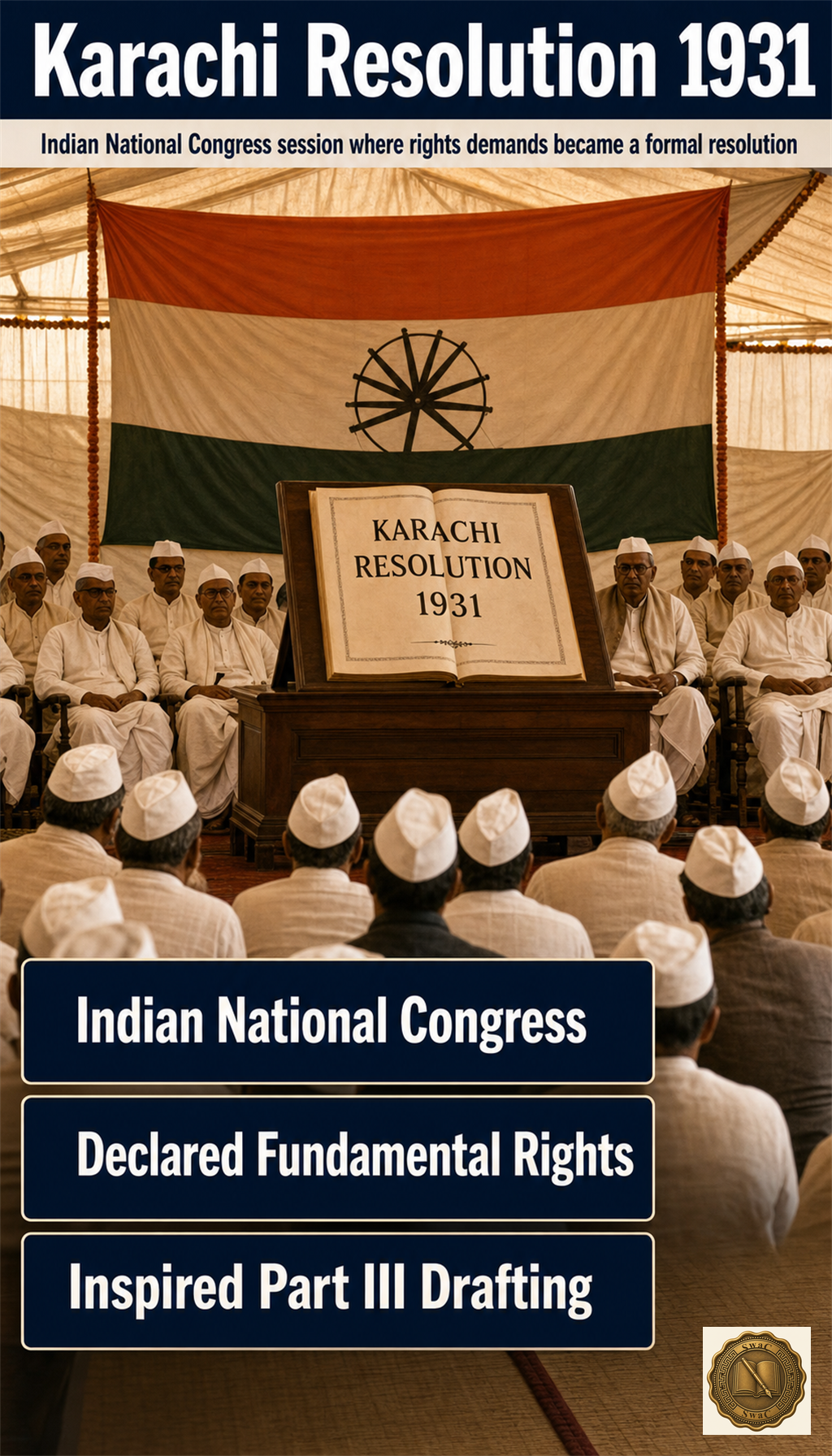
Rights born in the freedom movement
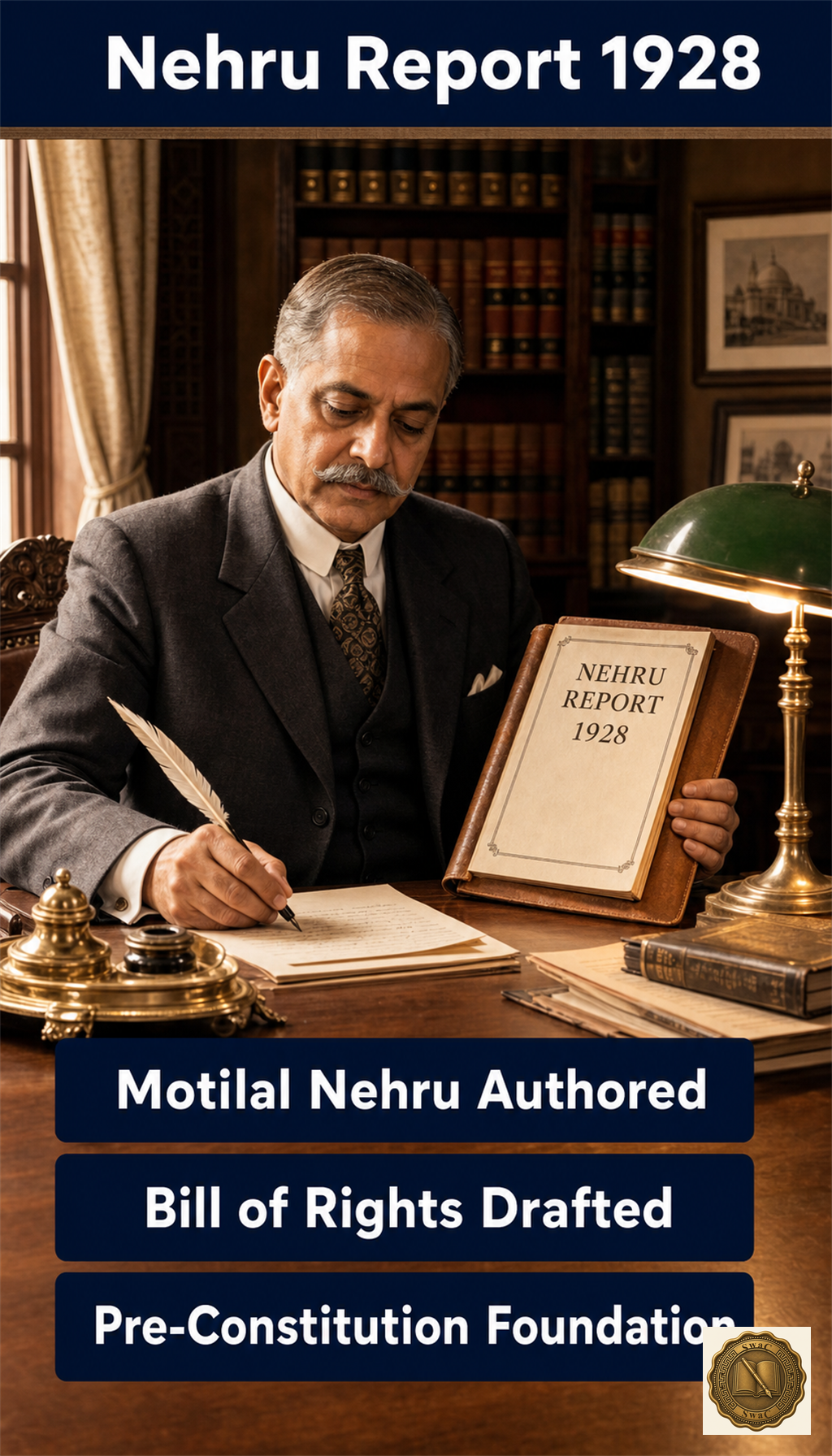
The demand for these rights was born in the freedom movement. The Indian National Congress's Karachi Resolution of 1931 carried a declaration of fundamental rights, and the Nehru Report of 1928 had already proposed a bill of rights. When the framers came to write Part III, they studied the US Bill of Rights, the French Declaration of the Rights of Man and the UN Declaration of Human Rights. They began with seven categories of rights — but the Right to Property was struck out by the 44th Amendment in 1978 and made an ordinary constitutional right under Article 300A, leaving the six we know today.
Marks-winning facts · recall first
- Inspired by the US Bill of Rights, French & UN Declarations
- Right to Property now a constitutional right under Article 300A
The ground rules
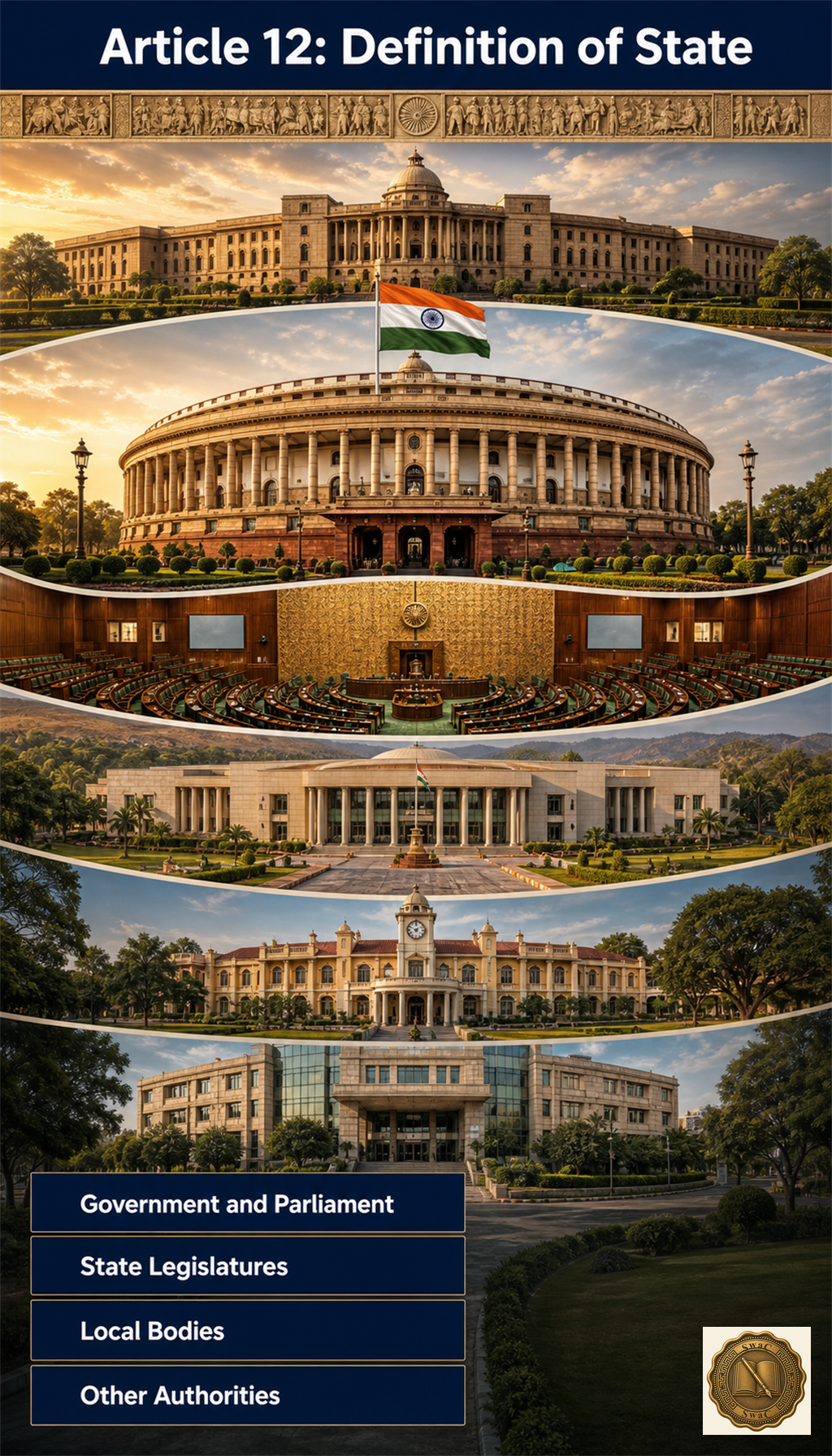
What the State is, and what it cannot do
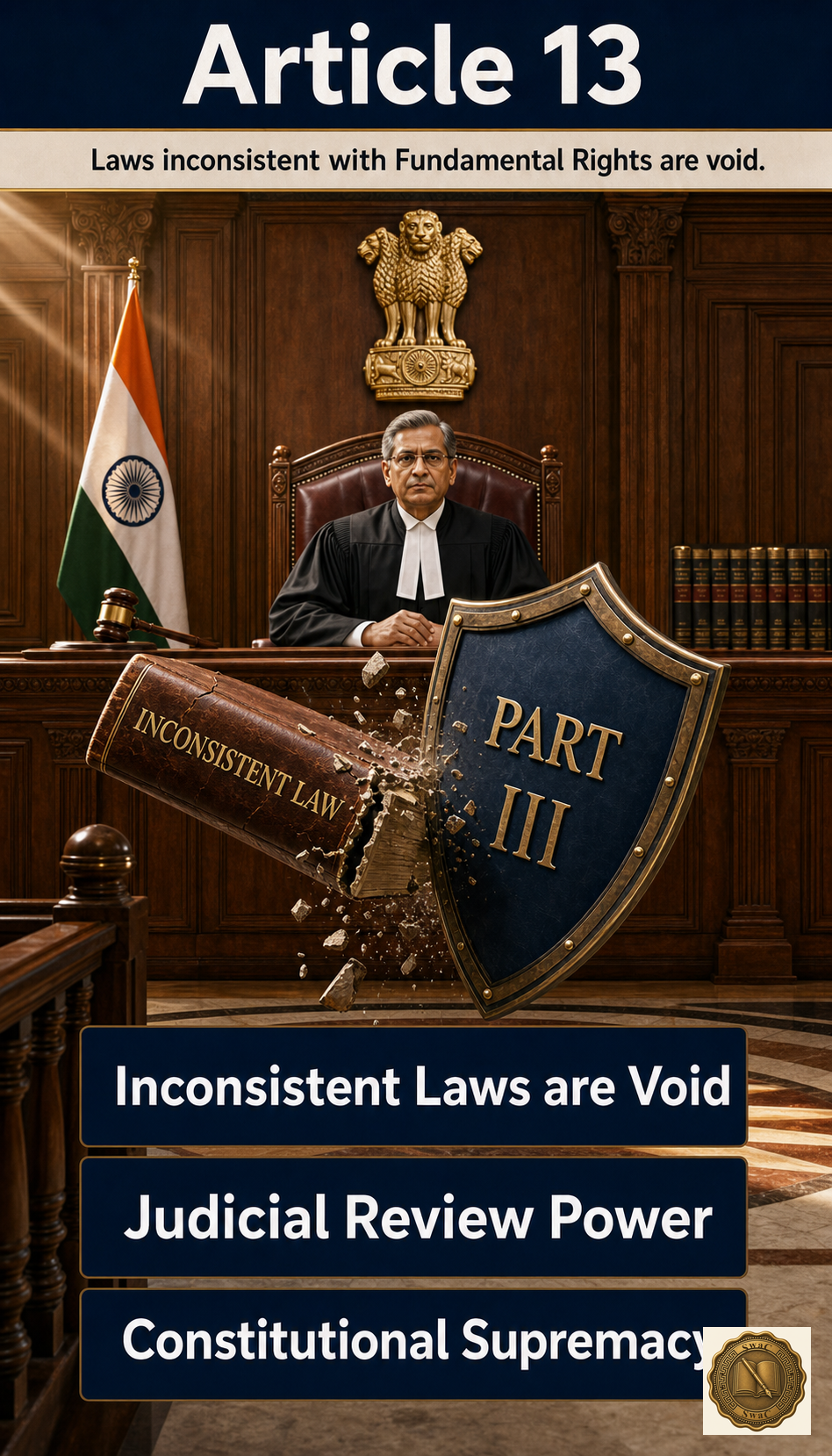
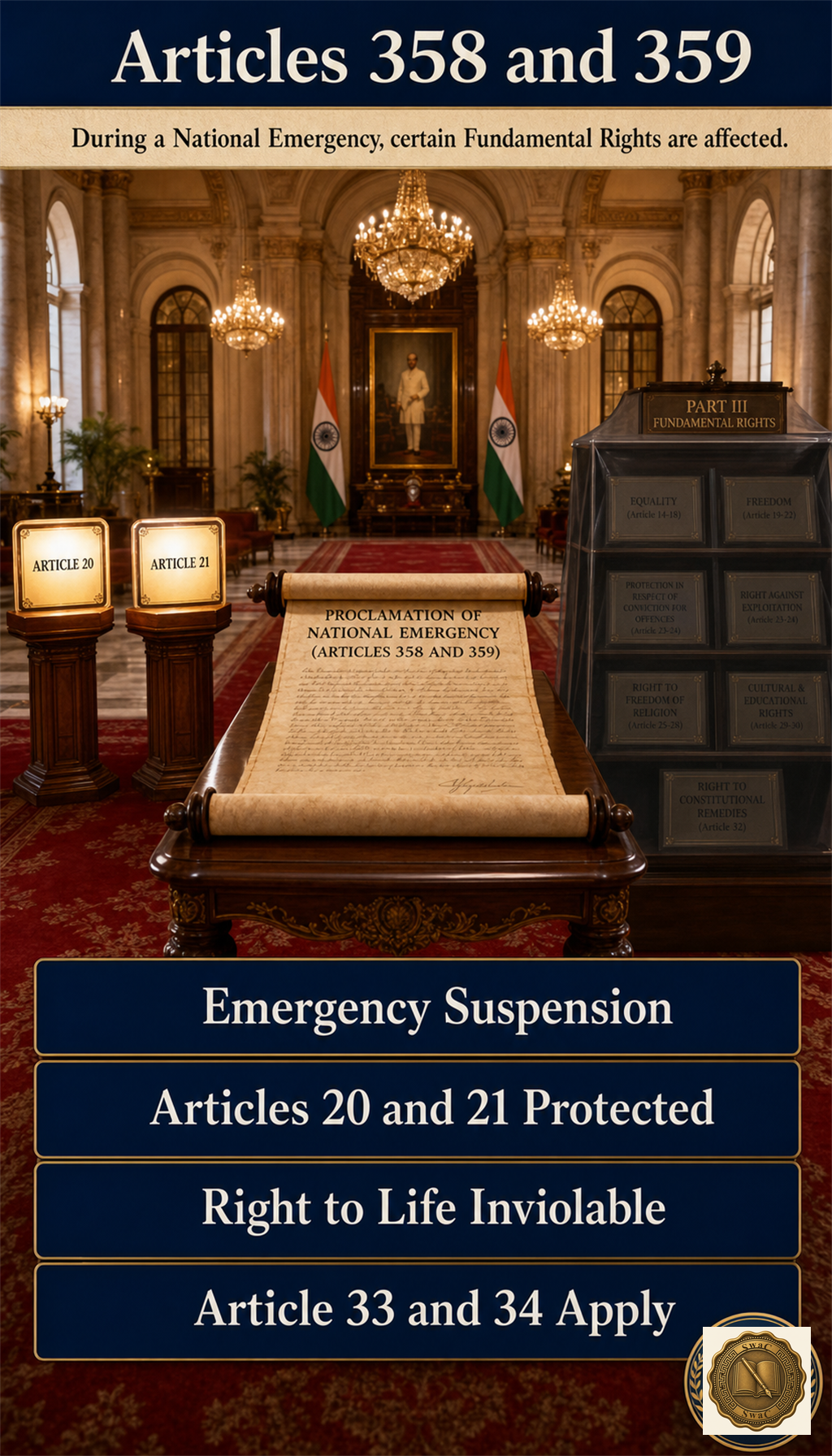
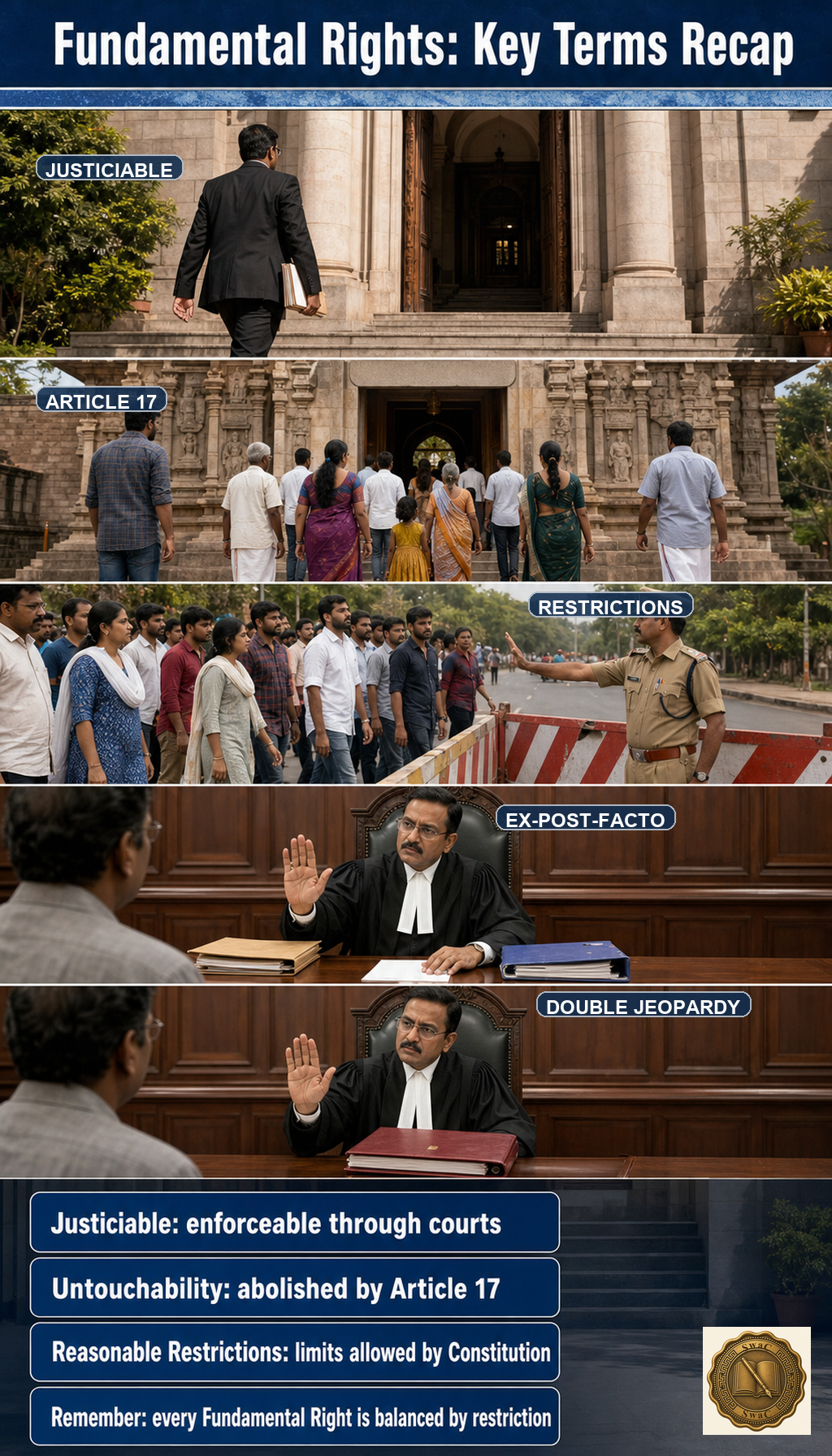
Before the rights themselves, Part III lays down the ground rules. Article 12 defines 'State' broadly to include the Government, Parliament, the State Legislatures, local bodies and other authorities, while Article 13 declares any law inconsistent with a Fundamental Right void to the extent of the inconsistency. These rights are not absolute — they bow to reasonable restrictions — and during a National Emergency they may be suspended under Articles 358 and 359, except for Articles 20 and 21. Parliament may also restrict or abrogate them for the Armed Forces under Article 33 and during Martial Law under Article 34.
Marks-winning facts · recall first
II
Equality Before the Law

The first right
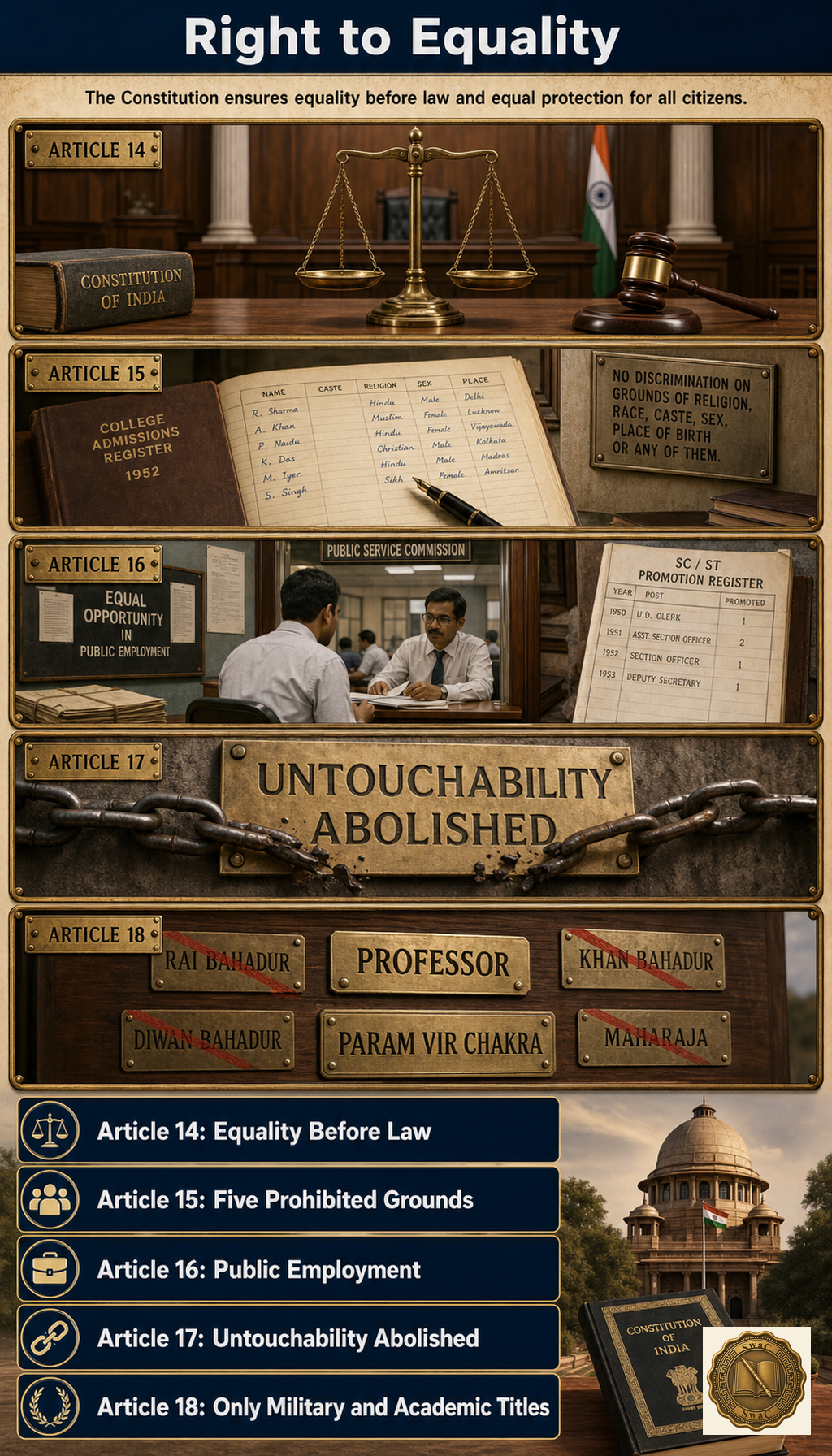
Two traditions of equality, and the door to reservation
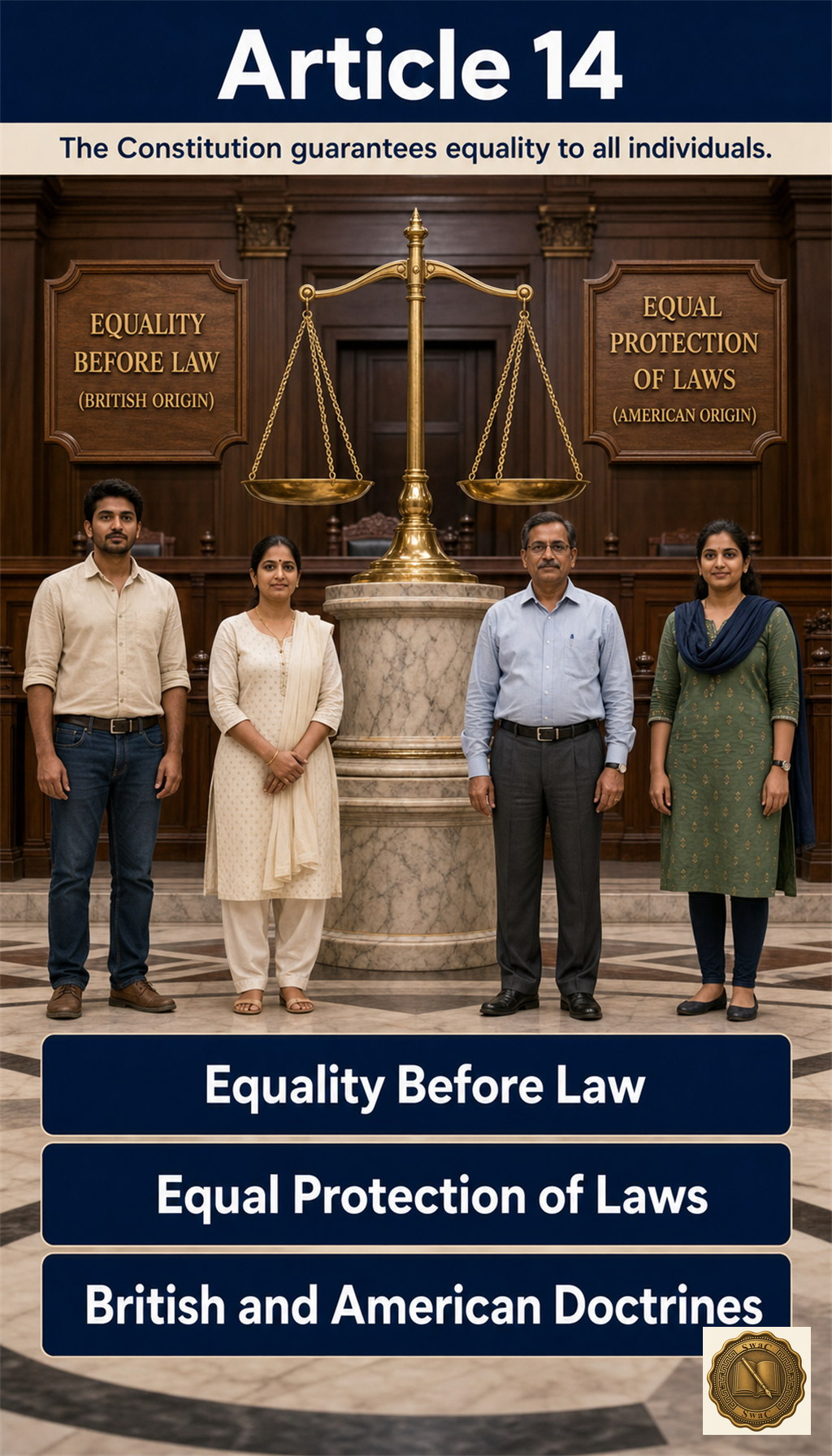
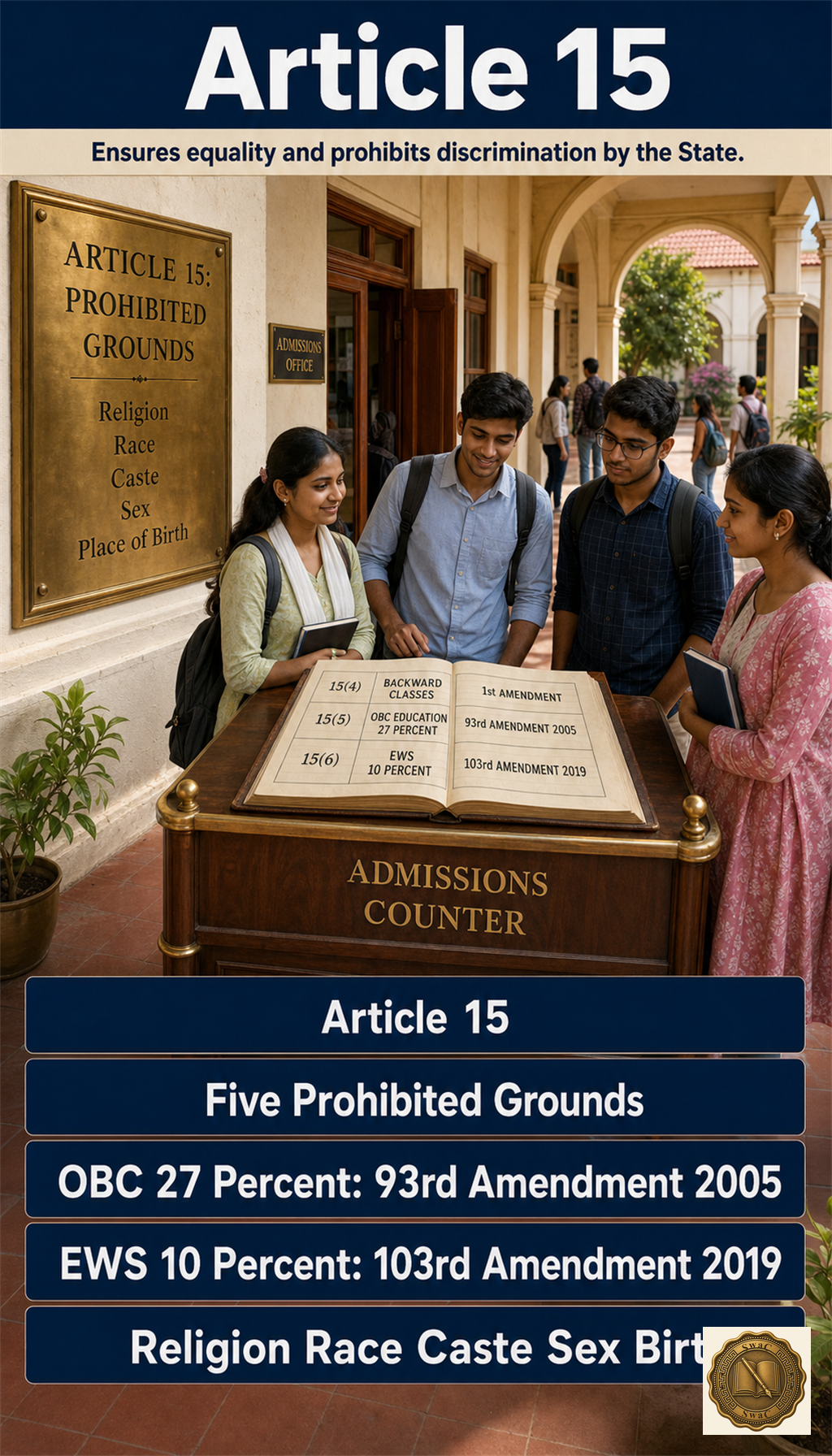
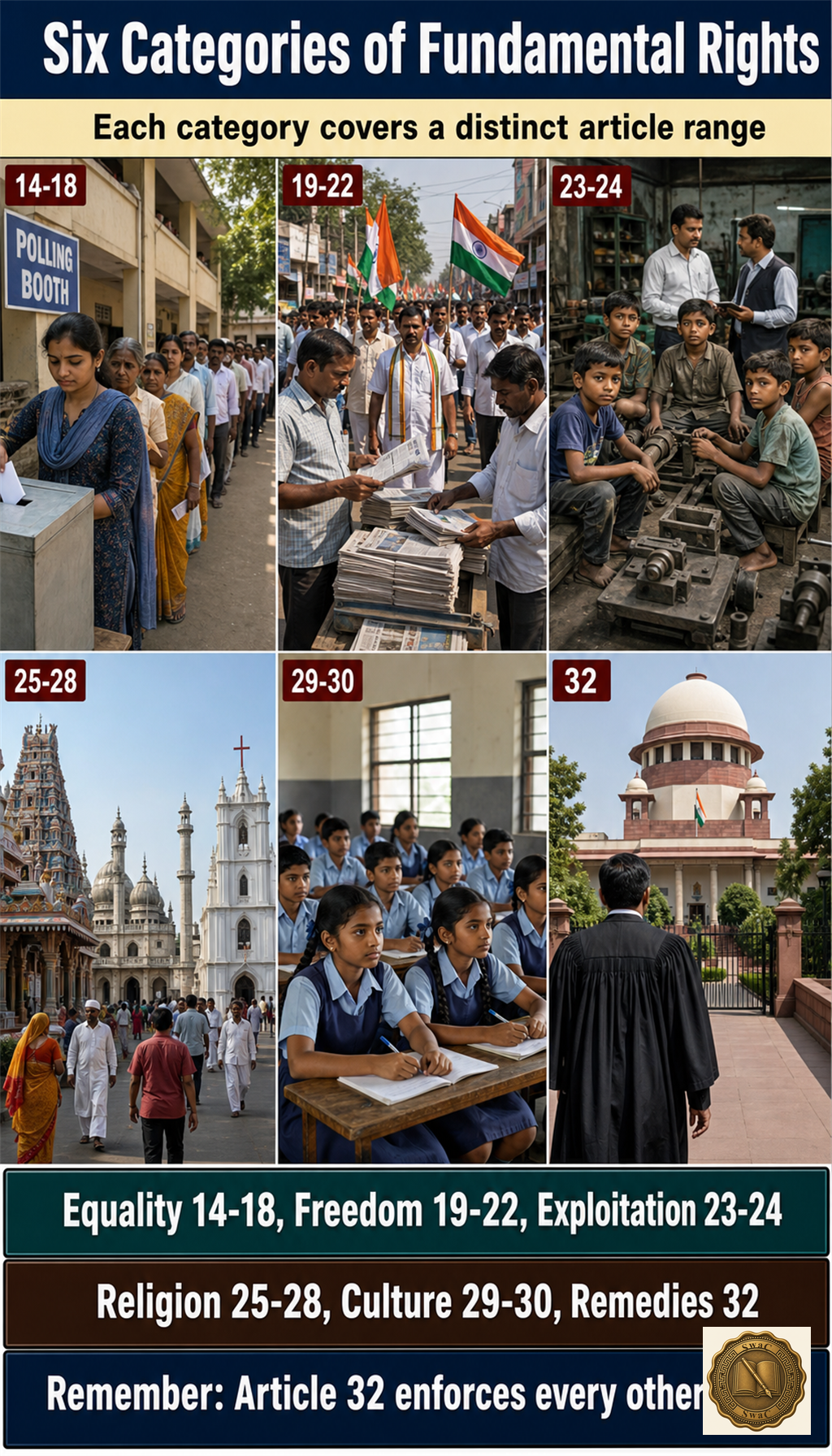
The first of the six guarantees runs from Article 14 to 18. Article 14 fuses two traditions — the British 'equality before law' and the American 'equal protection of the laws.' Article 15 forbids discrimination on five grounds alone — religion, race, caste, sex and place of birth — while its later clauses opened reservation: 15(4) for backward classes, 15(5)'s 27% OBC quota in education by the 93rd Amendment (2005), and 15(6)'s 10% EWS quota by the 103rd Amendment (2019). Article 17 abolishes untouchability and is enforceable even against private individuals, and Article 18 abolishes titles except military and academic ones.
Marks-winning facts · recall first
III
The Right to Liberty
The six freedoms
Speech, assembly, and the limits of liberty
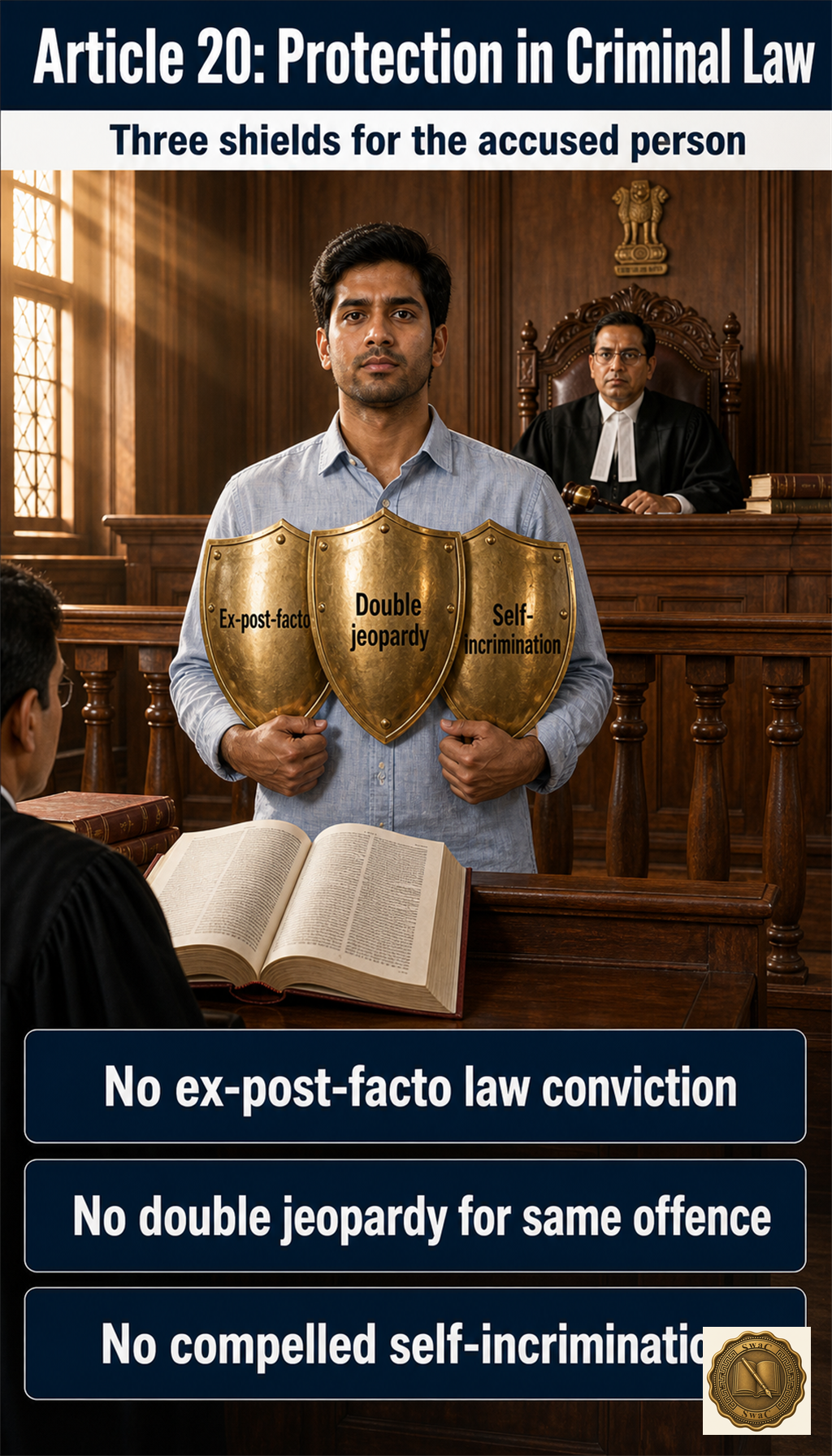
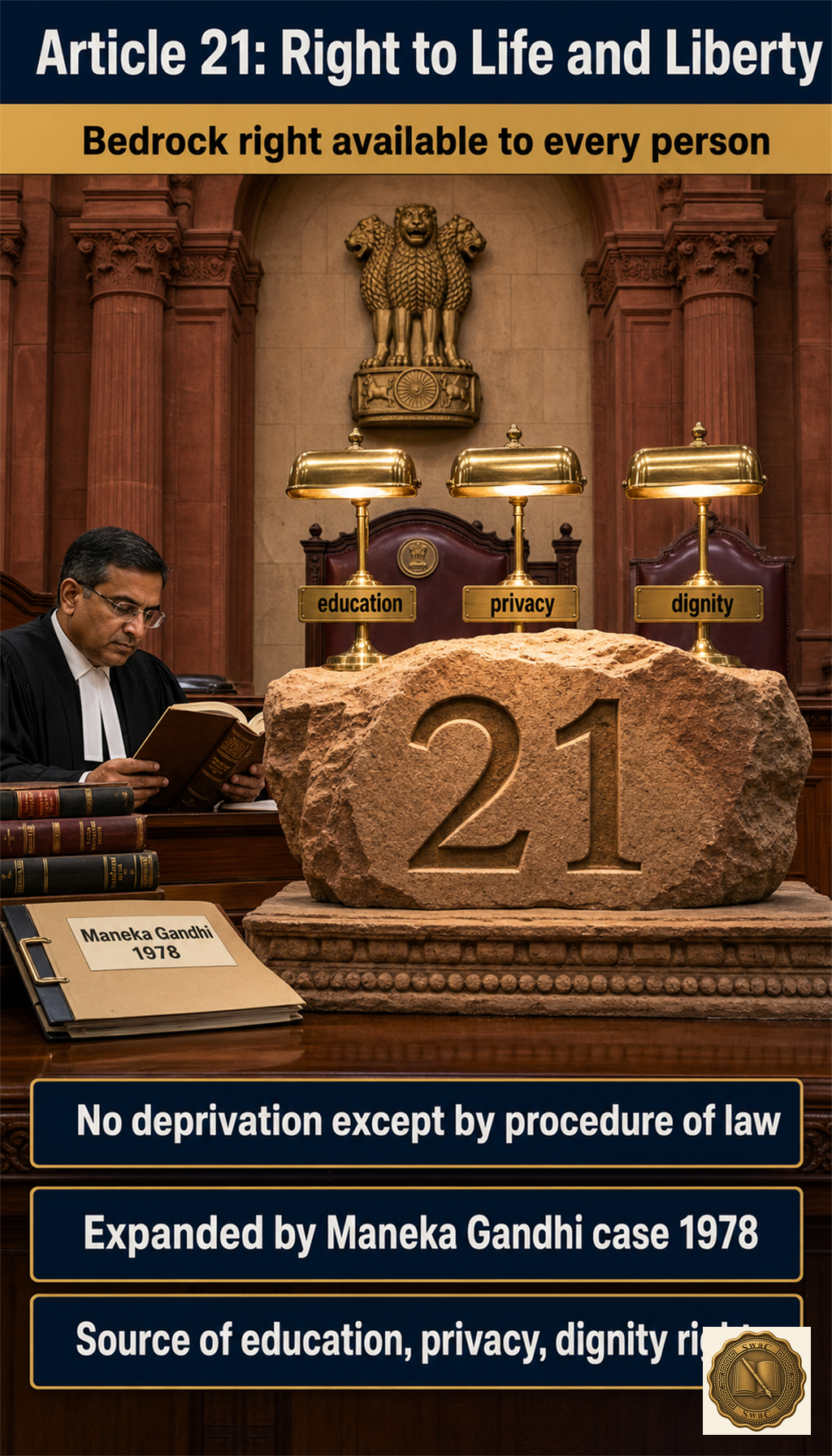
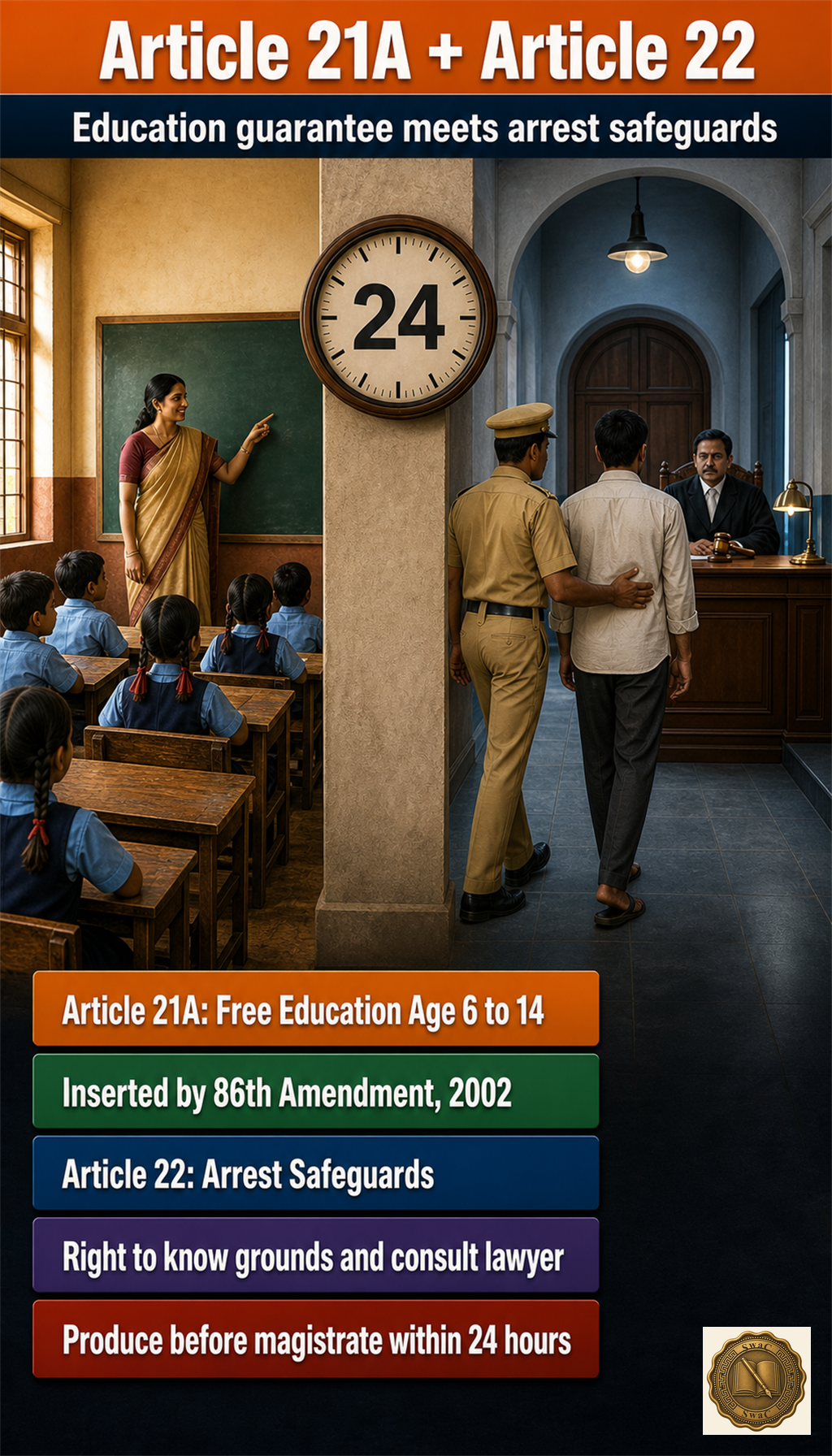
Articles 19 to 22 protect personal liberty. Article 19 gives citizens six freedoms — speech and expression, peaceful assembly, association, movement, residence, and profession — each subject to reasonable restrictions such as public order, decency and the security of the state. Article 20 shields against arbitrary conviction through three bars: no ex-post-facto law, no double jeopardy, and no self-incrimination. Article 21 guarantees that no person shall be deprived of life or personal liberty except by procedure established by law, Article 21A makes education free and compulsory for ages 6 to 14 (86th Amendment, 2002), and Article 22 requires that an arrested person be produced before a magistrate within 24 hours.
Marks-winning facts · recall first
Citizen or person
The distinction examiners love
One distinction is tested again and again. The six freedoms of Article 19 belong only to citizens of India. But Articles 20 and 21 — protection against conviction and the right to life and personal liberty — extend to all persons, citizens and non-citizens alike, anyone present on Indian soil. The framers drew the line deliberately: political freedoms for the citizen, the bare protections of life and liberty for every human being.
Marks-winning facts · recall first
IV
Conscience and Dignity
Against exploitation
No forced labour, no child in the mine
Articles 23 and 24 guard the powerless. Article 23 prohibits traffic in human beings and all forms of forced labour — begar, bonded labour and trafficking — and, like Article 17, it binds private persons, not just the State. Article 24 bars the employment of any child below 14 years in factories, mines or hazardous work.
Marks-winning facts · recall first
Freedom of religion
To profess, practise and propagate
Articles 25 to 28 secure freedom of religion. Article 25 grants every person freedom of conscience and the right to profess, practise and propagate religion, subject to public order, morality and health. Article 26 allows religious denominations to manage their own affairs and property, Article 27 forbids compelling anyone to pay taxes for promoting a religion, and Article 28 bars religious instruction in wholly State-funded institutions.
Marks-winning facts · recall first
Minority rights
The right to keep your script and your school
Articles 29 and 30 protect minorities. Article 29 lets any section of citizens with a distinct language, script or culture conserve it. Article 30 gives both religious and linguistic minorities the right to establish and administer educational institutions of their choice.
Marks-winning facts · recall first
V
The Heart and Soul
The enforcer
The article Ambedkar called the heart and soul
If the rights are promises, Article 32 is the power to enforce them. It gives every person the right to move the Supreme Court directly for the enforcement of Fundamental Rights — which is why Dr. Ambedkar called it the 'heart and soul' of the Constitution. The Supreme Court stands as the guarantor and guardian of these rights.
Marks-winning facts · recall first
The five writs
Five Latin commands of the court
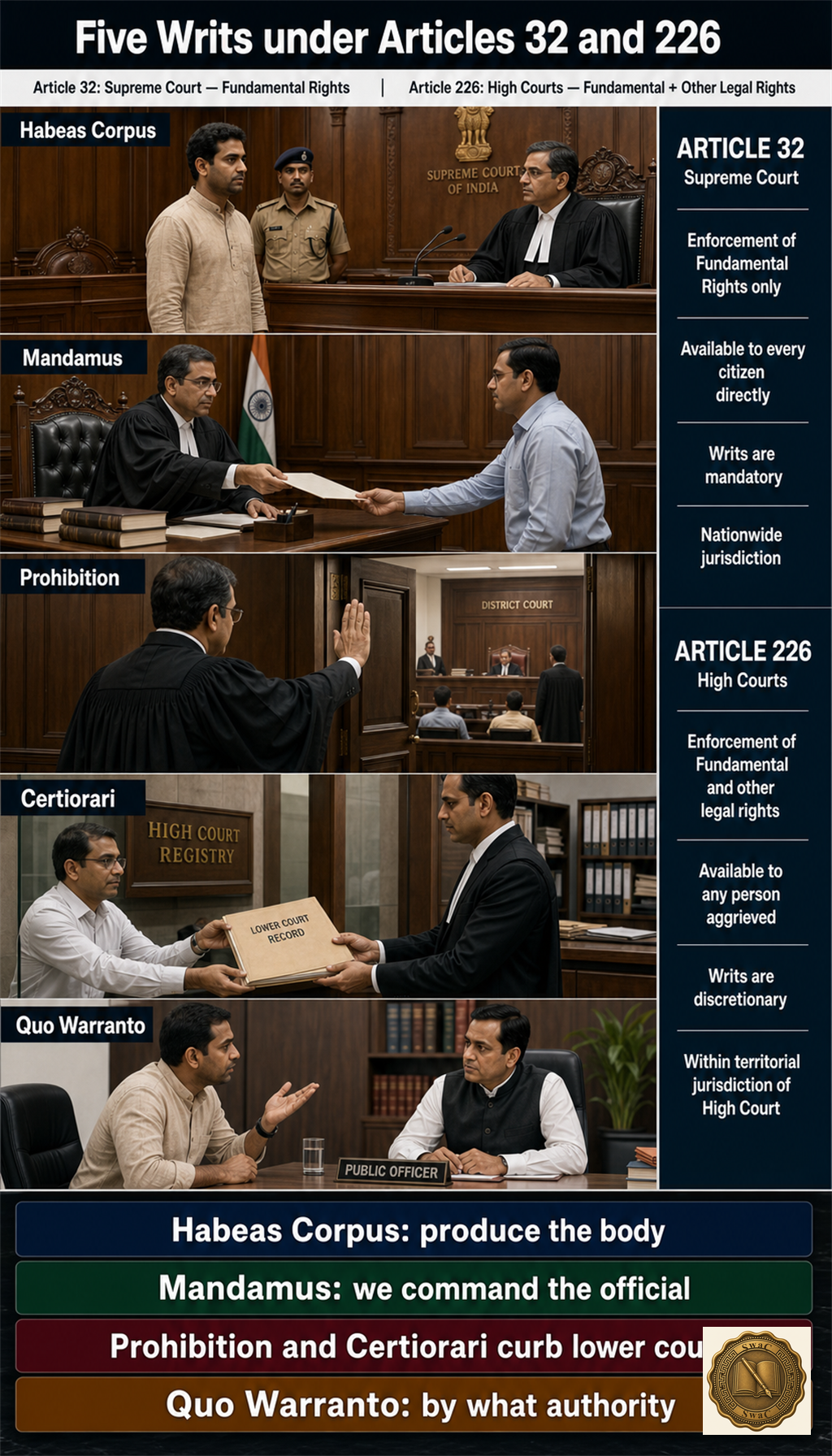
Article 32 arms the Court with five writs. Habeas Corpus — 'to have the body' — strikes at unlawful detention; Mandamus — 'we command' — orders a public official to perform a legal duty, though never a private person or the President or a Governor. Prohibition stops a lower court from exceeding its jurisdiction while a case is still pending, Certiorari quashes an order already passed beyond jurisdiction, and Quo Warranto — 'by what authority' — challenges a person holding a public office without legal right.
Marks-winning facts · recall first
The wider door
Why the High Court's reach is greater
The writ power is not the Supreme Court's alone. Under Article 226, the High Courts can issue the same writs — and their jurisdiction is wider, because a High Court may issue them not only to enforce Fundamental Rights but for 'any other purpose' as well.
Marks-winning facts · recall first
- High Courts issue writs for FR enforcement AND for 'any other purpose'
VI
The Court Speaks
Landmark cases1973 CE
How the Supreme Court rewrote the rights
The Supreme Court rewrote the meaning of these rights case by case. In A.K. Gopalan (1950) Article 21 was read narrowly, but Maneka Gandhi v. Union of India (1978) transformed it, holding that any procedure depriving a person of liberty must be fair, just and reasonable. Kesavananda Bharati (1973) ruled that Fundamental Rights can be amended but the Constitution's Basic Structure cannot be destroyed; Indra Sawhney (1992) capped reservations at 50% and introduced the creamy layer; and K.S. Puttaswamy (2017) declared the Right to Privacy a fundamental right under Article 21.
Marks-winning facts · recall first
The inviolable two
The rights an Emergency cannot touch
During a National Emergency the State may suspend Fundamental Rights under Articles 358 and 359 — but two stand beyond its reach. Article 20, the protection against arbitrary conviction, and Article 21, the right to life and personal liberty, can never be suspended, even at the height of an Emergency. They are absolute and inviolable.
Marks-winning facts · recall first
- Both are absolute and inviolable even during National Emergency
The article map
The numbers worth memorizing
One table collects the articles APPSC loves most. Article 12 defines 'State', Article 13 voids any law that violates a Fundamental Right, and Article 14 promises equality before the law. Article 17 makes untouchability enforceable against private persons, Article 21A fixes the right to education at ages 6 to 14, and Article 33 lets Parliament restrict these rights for the armed forces.
Marks-winning facts · recall first
VII
The Andhra Aspirant
The AP connection
Article 371D and the writs in English
For Andhra aspirants the chapter is doubly close. With a large SC, ST and OBC population, the reservation provisions of Articles 15 and 16 bear directly on the state, and Article 371D grants special provisions for equitable opportunities in Andhra Pradesh's public employment and education. APPSC papers frequently test article numbers against their provisions, so Telugu-medium students must remember that the writ names stay in English — they are Latin terms used as they are.
Marks-winning facts · recall first
Exam tactics
Play the patterns the examiners repeat
Play the patterns the examiners repeat. Article ranges — 14-18, 19-22, 23-24, 25-28, 29-30 and 32 — and matching each writ to its purpose are the highest-frequency questions, alongside 'heart and soul' (Article 32) and 'cannot be suspended in Emergency' (Articles 20 and 21). Know that Articles 20 and 21 reach all persons and not just citizens, that the High Court's writ jurisdiction (Article 226) is wider than the Supreme Court's, and that the Right to Property was removed by the 44th Amendment and now sits in Article 300A. Maneka Gandhi (expanded Article 21), Indra Sawhney (50% ceiling) and K.S. Puttaswamy (privacy) round out the most-tested cases.
Marks-winning facts · recall first
End of chapter
Now make it yours
Article ranges, the five writs, and the inviolable Articles 20 & 21 are the single most tested facts in this chapter. Open the full notes, then test yourself.
Practice MCQs on this chapter →